
Radiation Therapy Abroad: Costs, Top Destinations, and What to Expect
Facing a cancer diagnosis is undoubtedly one of the most challenging experiences a person can endure. Amidst the uncertainty, understanding your treatment options becomes a source of empowerment. Radiation therapy, a cornerstone of modern oncology, offers a high-precision approach to destroying cancer cells while preserving the integrity of healthy tissue. For many patients in the United States, Canada, and Europe, the hurdles of high costs, long waiting lists, and limited access to the latest technology can be daunting. This is why a growing number of individuals are turning to medical tourism, seeking world-class radiotherapy in international centers of excellence. This guide serves as your strategic roadmap, exploring the scientific mechanisms, technological advancements, and the logistical ease of securing life-saving care on a global scale.
The Biological Foundation: How Radiotherapy Eradicates Malignancy
Radiation therapy works on a cellular level, utilizing high-energy rays or particles to damage the DNA of cancer cells. When the genetic blueprint of a cell is compromised, it loses its ability to divide and grow. Over time, these damaged cells die off, and the body naturally processes and removes them. Unlike chemotherapy, which is systemic, radiotherapy is a localized treatment. This means it is targeted specifically at the tumor site, minimizing the impact on the rest of the body. The goal of every radiation oncologist is to deliver a lethal dose of radiation to the tumor while keeping the dose to surrounding healthy organs as low as possible.

The Mechanics of Ionization and Cellular Death
The process of “ionization” occurs when radiation strips electrons from atoms within the cell. This chemical change creates free radicals that aggressively attack the DNA strands. Cancer cells are particularly vulnerable to this damage because they lack the robust repair mechanisms found in healthy cells. Consequently, while healthy cells can often recover from low doses of radiation, cancer cells are pushed toward a process called “mitotic catastrophe,” essentially leading to their biological collapse. This differential in repair capability is the fundamental “therapeutic window” that doctors exploit to cure patients.
External Beam vs. Internal Radiation (Brachytherapy)
Radiotherapy is generally categorized into two main types: External Beam Radiation Therapy (EBRT) and Brachytherapy. EBRT uses a machine called a linear accelerator to direct high-energy beams from outside the body into the tumor. This is the most common form used for many cancers, including lung, breast, and prostate. Brachytherapy, on the other hand, involves placing radioactive sources directly inside or very close to the tumor. This allows for an extremely high dose of radiation to be delivered to a small area, which is highly effective for localized cancers such as cervical or prostate cancer, while sparing nearby tissues like the bladder or rectum.
The Strategic Advantage: Why International Radiotherapy Makes Sense
For patients in North America and Europe, the primary drivers for seeking care abroad are accessibility, technology, and cost. In countries with socialized medicine, such as Canada or the UK, waiting lists for specialized radiation treatments like Proton Therapy or CyberKnife can be months long—time that a cancer patient simply does not have. In the US, even with insurance, the out-of-pocket costs for advanced radiotherapy can be financially devastating. By looking globally, patients can bypass these barriers, gaining immediate access to top-tier care in accredited international hospitals.
Furthermore, many international hospitals have invested heavily in state-of-the-art technology, such as Image-Guided Radiation Therapy (IGRT), Intensity-Modulated Radiation Therapy (IMRT), Stereotactic Body Radiation Therapy (SBRT), and even Proton Therapy, which may not be readily available or affordable in your home country. This access to cutting-edge equipment, combined with highly experienced oncology teams, ensures you receive the most precise and effective treatment available.
How Do I Choose the Right Clinic for Radiation Therapy Abroad?
Choosing the right clinic is paramount for a successful medical journey. Begin by researching hospitals that hold international accreditations, such as those from the Joint Commission International (JCI), which signifies adherence to global healthcare standards. Look for clinics specializing in oncology with dedicated radiation therapy departments.
Equally important is the expertise of the medical team. Verify the qualifications, experience, and specialization of the radiation oncologists. Advanced equipment like linear accelerators capable of delivering IMRT, VMAT, or SBRT is crucial for precise treatment. Finally, consider the support services offered to international patients—things like airport transfers, accommodation assistance, translation services, and a dedicated patient coordinator can significantly ease the process.
Economic Realities and Cost-Saving Potential
The cost of advanced radiotherapy in countries like Turkey, China, or Mexico can be 50% to 70% lower than in the US or Western Europe. These savings are not a reflection of lower quality; rather, they result from lower labor costs, government investments in medical infrastructure, and different pharmaceutical pricing structures.
Cost is often a primary driver for seeking radiation therapy abroad. The difference in price can be staggering, with savings ranging from 30% to over 70% compared to out-of-pocket costs in countries like the United States or the United Kingdom. These savings are due to various factors, including lower operational costs, less administrative overhead, and different healthcare payment structures in destination countries.
For example, a full course of radiation therapy that might cost $50,000 to $150,000 or more in the US could be available for $15,000 to $40,000 in countries renowned for medical tourism. This significant price differential makes advanced cancer treatment accessible to a much broader range of patients, allowing them to receive necessary care without facing financial ruin.
What Support Services Are Available for Medical Tourists Undergoing Radiation Therapy?
Medical tourism providers understand the unique needs of international patients. To ensure a smooth and stress-free experience, many offer comprehensive support services designed to handle all aspects of your travel and treatment. These can include initial online consultations, assistance with medical records transfer, visa application guidance, and travel arrangements.
Upon arrival, you can expect services like airport pick-up, accommodation booking in partner hotels or apartments, and dedicated translators to facilitate communication with your medical team. A personal patient coordinator often acts as your single point of contact, guiding you through every step, from scheduling appointments to post-treatment follow-up. This holistic approach ensures patients can focus solely on their recovery.
Is International Radiation Therapy Safe and Effective?
The perception of safety and quality is crucial when considering medical care abroad. Reputable medical tourism destinations and their hospitals often pride themselves on adhering to stringent international standards, comparable to those in developed Western nations. Many doctors practicing in these facilities have received training in the US or Europe and are board-certified, bringing world-class expertise to their practice.
Furthermore, the technology used in leading international cancer centers is often cutting-edge, ensuring precise and effective radiation delivery. Patients consistently report positive outcomes and high satisfaction levels, emphasizing the excellent care received. It’s always wise to research a clinic’s accreditation, physician credentials, and patient testimonials to ensure peace of mind.
What Are the Different Types of Radiation Therapy?
Radiation therapy is not a one-size-fits-all treatment. There are several distinct types, each designed for specific cancer situations:
- External Beam Radiation Therapy (EBRT): This is the most common type. A machine outside the body directs radiation beams at the cancer.
- Intensity-Modulated Radiation Therapy (IMRT): Delivers radiation in varying intensities, allowing doctors to conform the radiation dose to the tumor’s shape, even complex ones, and spare more surrounding healthy tissue.
- Volumetric Modulated Arc Therapy (VMAT): A type of IMRT where the machine rotates around the patient during treatment, delivering radiation continuously and very quickly.
- Stereotactic Body Radiation Therapy (SBRT) / Stereotactic Radiosurgery (SRS): Delivers very high doses of radiation in fewer sessions (1-5 treatments) to small, well-defined tumors, often used for lung, liver, spine, brain, or prostate cancer.
- Proton Therapy: Uses protons instead of photons (X-rays). Protons deposit most of their energy at a specific depth, known as the Bragg peak, allowing for highly precise targeting and minimal radiation dose beyond the tumor, beneficial for sensitive areas or pediatric cancers.
- Internal Radiation Therapy (Brachytherapy): Radioactive sources are placed inside or very close to the tumor.
- Low-Dose Rate (LDR) Brachytherapy: Seeds or pellets are permanently implanted and emit radiation slowly over weeks or months.
- High-Dose Rate (HDR) Brachytherapy: A higher dose of radiation is delivered over a few minutes, then the source is removed. This is often done over several sessions.
- Systemic Radiation Therapy: Radioactive substances are given orally or intravenously, traveling throughout the body to find and kill cancer cells. A common example is radioactive iodine (I-131) for thyroid cancer.
The choice of radiation type depends on the cancer’s location, size, type, and the patient’s overall health.
Who is Eligible for Radiation Therapy?
Radiation therapy is a versatile treatment used for a wide range of cancers. Eligibility is determined by a multidisciplinary team of oncologists, considering factors such as:
- Cancer Type and Stage: Many solid tumors, including breast, prostate, lung, head and neck, colorectal, and gynecological cancers, respond well to radiation. It can be used for early-stage localized cancers or more advanced stages.
- Tumor Location and Size: Radiation is effective for tumors that can be precisely targeted without causing excessive damage to critical organs nearby.
- Overall Health and Medical History: Patients must be healthy enough to tolerate the treatment. Certain pre-existing conditions or previous radiation exposure can influence eligibility.
- Treatment Goal: Radiation can be curative (aiming to eliminate cancer), neoadjuvant (before surgery to shrink tumors), adjuvant (after surgery to kill remaining cells), or palliative (to relieve symptoms like pain).
- Combination Therapy: It’s often used in conjunction with chemotherapy, immunotherapy, or surgery, depending on the specific treatment protocol.
A thorough evaluation, including detailed imaging and pathology reports, is essential to determine if radiation therapy is the most appropriate and beneficial course of action for an individual patient.
What Are the Potential Side Effects of Radiation Therapy?
Like all cancer treatments, radiation therapy can cause side effects. These are typically localized to the area being treated and can vary significantly from person to person. Common acute (short-term) side effects include:
- Fatigue: A feeling of extreme tiredness, often the most common side effect, regardless of the treated area.
- Skin Changes: In the treated area, skin may become red, dry, itchy, sensitive, or peel, similar to a sunburn.
- Hair Loss: Occurs only in the treated area (e.g., on the scalp for brain tumors, not elsewhere on the body).
- Nausea and Vomiting: More common when treating the abdomen or brain.
- Sore Throat/Difficulty Swallowing: If the head and neck area is treated.
- Diarrhea or Bladder Irritation: If the abdomen or pelvis is treated.
Most acute side effects subside within a few weeks after treatment ends. Long-term (chronic) side effects are less common but can include fibrosis (scarring), lymphedema, or changes to the function of irradiated organs. Your medical team will monitor you closely and provide strategies to manage any side effects.
How Do Doctors Plan and Deliver Radiation Therapy?
The planning of radiation therapy is a highly individualized and meticulous process, crucial for effective treatment and minimizing side effects. It typically involves several key steps:
- Consultation and Imaging: After initial diagnosis, a radiation oncologist evaluates the patient’s medical history, performs a physical exam, and reviews diagnostic images (CT, MRI, PET scans).
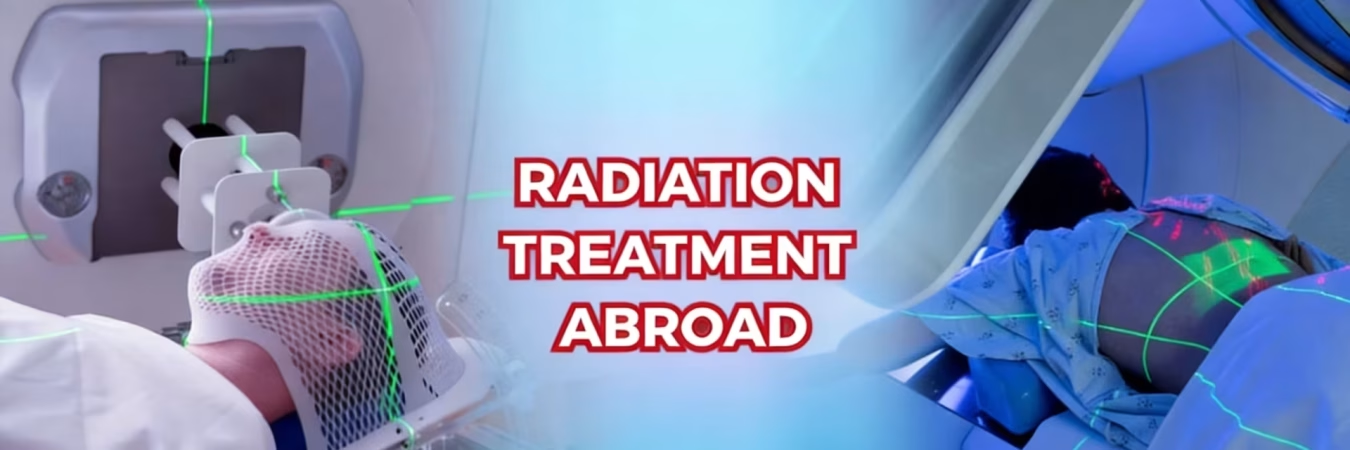
- Simulation: This involves a specialized CT scan, often combined with other imaging, to precisely map the tumor’s location and surrounding healthy organs. The patient lies in the exact position they will be in during treatment, using immobilization devices (e.g., molds, masks) to ensure consistent positioning for every session. Small skin marks or tattoos may be made.
- Treatment Planning: Using the simulation images, a dosimetrist and radiation oncologist, often in conjunction with a medical physicist, create a detailed 3D or 4D treatment plan. This plan determines the exact angles, shapes, and intensities of the radiation beams to deliver the prescribed dose to the tumor while avoiding critical structures.
- Quality Assurance: Before the first treatment, the plan undergoes rigorous quality checks to ensure accuracy and safety.
- Treatment Delivery: During each session, the patient is positioned on a treatment couch under a linear accelerator. The machine delivers radiation for a few minutes, often with daily imaging (Image-Guided Radiation Therapy – IGRT) to confirm tumor position and patient alignment. The entire process for a single session is typically quick, ranging from 10 to 30 minutes, although the actual radiation delivery is much shorter.
This systematic approach ensures that each patient receives a highly personalized and precise treatment tailored to their unique cancer and anatomy.
Worldwide Cost Comparison: Radiation Therapy
The cost of radiation therapy can be a significant barrier for many patients, especially when specialized techniques are required. Medical tourism provides a viable solution by offering high-quality treatment at much lower prices. Here’s a general comparison of estimated costs for a full course of radiation therapy (e.g., IMRT/VMAT), though prices can vary based on the specific type of radiation, number of sessions, and clinic reputation.
| Country | Estimated Cost Range (USD) |
|---|---|
| United States | $50,000 – $150,000+ |
| United Kingdom | $30,000 – $80,000 |
| India | $8,000 – $25,000 |
| Turkey | $10,000 – $30,000 |
| Mexico | $12,000 – $35,000 |
| China | $12,000 – $30,000 |
| South Korea | $15,000 – $40,000 |
*Note: These are estimated ranges and actual costs can vary based on individual case, clinic, and specific treatment protocol. Costs generally include the full course of radiation therapy but may not include initial consultations, diagnostic tests, or post-treatment follow-up appointments.
What to Expect During Your Radiation Therapy Journey Abroad?
Embarking on a medical journey for radiation therapy abroad involves a well-structured process designed to provide both efficient treatment and a comfortable experience:
- Initial Consultation and Planning: This often begins with remote consultations, where you share your medical records, scans, and pathology reports. The overseas medical team will review your case and propose a treatment plan and cost estimate.
- Travel and Arrival: Once your treatment plan is confirmed, you’ll arrange travel. Most medical tourism facilitators and clinics assist with visas, flights, and airport transfers. Upon arrival, you’ll be greeted and transferred to your accommodation.
- On-site Evaluation and Simulation: Your first few days will involve in-person consultations, a physical exam, and the crucial simulation phase (CT scan, MRI) to precisely map your tumor and create immobilization devices for accurate treatment delivery.
- Treatment Sessions: Radiation therapy is typically delivered daily (Monday to Friday) over several weeks, depending on your specific plan. Each session is quick and painless. You’ll have regular check-ups with your radiation oncologist to monitor progress and manage any side effects.
- Post-Treatment Care and Follow-up: After your final session, the medical team will provide instructions for post-treatment care and follow-up. Many clinics offer telehealth options for remote follow-up once you return home. They will also provide all necessary medical reports and imaging for your local doctors.
Throughout this journey, dedicated patient coordinators ensure that all your needs are met, from logistical support to emotional comfort, making your focus solely on healing.
Take the Next Step with MedBridge
Ready to explore top-tier radiation therapy options worldwide? Your journey to effective cancer treatment at an affordable cost is just a click away. Explore leading international clinics, compare prices, and get a personalized quote for your radiation therapy with MedBridge. Let us help you plan a seamless and supportive medical travel experience. Start your healing journey today!
Most Commented